Green Home Certification Guide 2026: Ratings, Benefits, Subsidies & Home Loan Advantages
Anurag Sodani • June 8, 2026
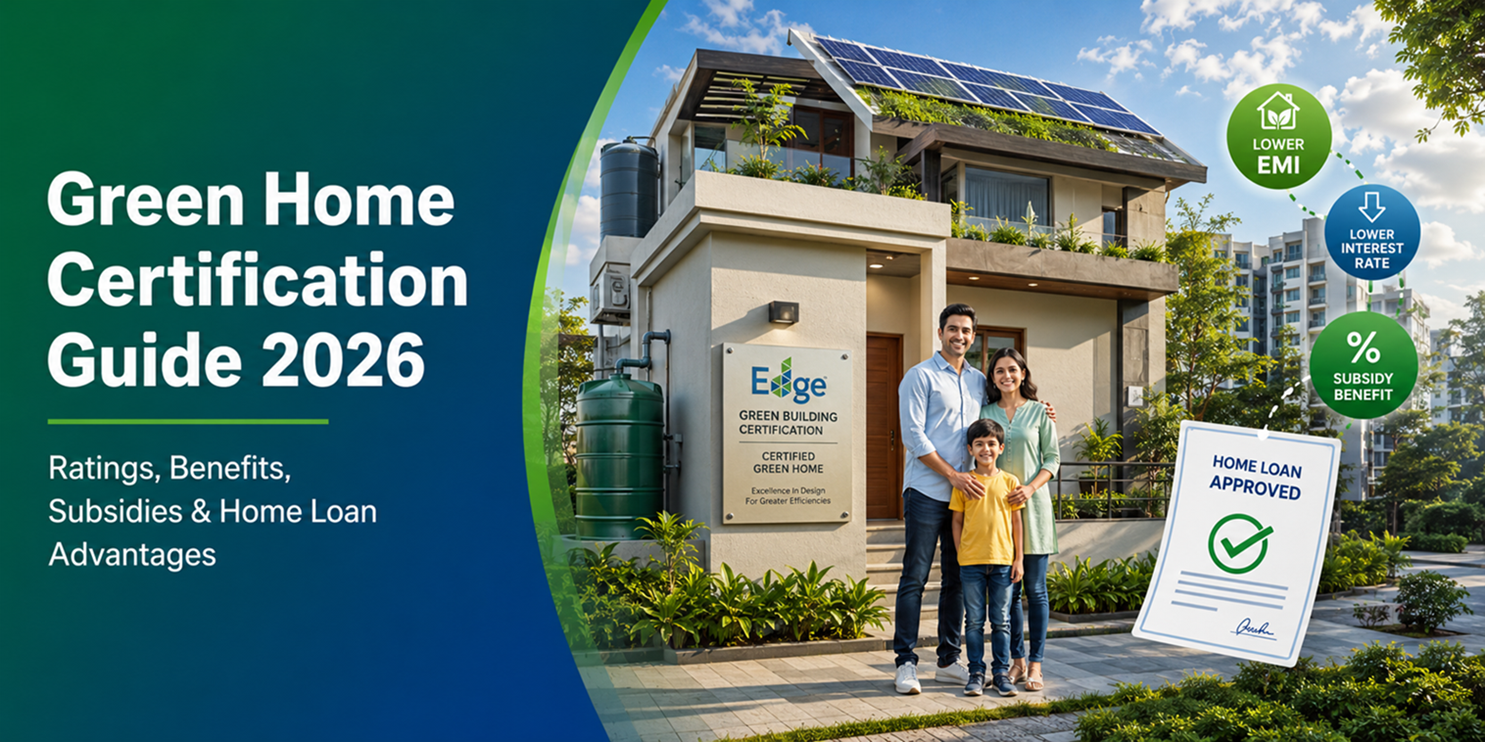

You have probably seen “green home” on builder hoardings, bank brochures, and government scheme pamphlets. Most first-time homeowners have no idea what it actually means, what certification costs, and whether there is real money to be saved. This blog answers all of that — no jargon, no vague generalisations.
First, What Actually Makes a Home “Green”?
A green home is not just one with solar panels on the roof or a few plants in the balcony. It is a home designed or built to measurably use less electricity, less water, and healthier materials — verified by an independent body, not self-declared.
Six things define a genuinely green home:
Eco-friendly building materials. Using materials like fly ash bricks, AAC blocks, or recycled aggregates during construction reduces the embodied carbon of the structure itself — before the first light switch is flipped.
Energy-efficient lighting, cooling systems, and appliances. LED lighting, BEE 5-star rated fans, BLDC motors, and energy-efficient ACs cut monthly electricity consumption in a way that is measurable and permanent.
Sustainable lifestyle design. This means mindful water usage built into the home itself — no cheap plastics in plumbing, no fixtures that waste water by default.
Natural light, ventilation, and heat protection. Good window placement, cross-ventilation design, and sunshades (even a simple 1.5-foot projection) reduce dependence on artificial lighting and cooling. This is cheap to build in, expensive to add later.
Renewable energy integration. Solar panels for water heating or electricity generation reduce grid dependence. Even a solar water heater qualifies a home for points under most green rating systems.
Water recycling and rainwater harvesting. Greywater reuse systems, rainwater harvesting tanks, and low-flow fixtures together cut a home’s water footprint significantly — and in many states, rainwater harvesting is now mandatory for new construction above a certain size.
The key word across all six is measurable. A green home follows specific standards, gets audited against those standards, and receives a certificate from an authorised rating body. That certificate is what separates a genuinely green home from one that just calls itself green.
Who Certifies Green Homes in India?
India has two primary bodies that certify green buildings for the residential sector, and one national system used for government projects.
EDGE — Excellence in Design for Greater Efficiencies
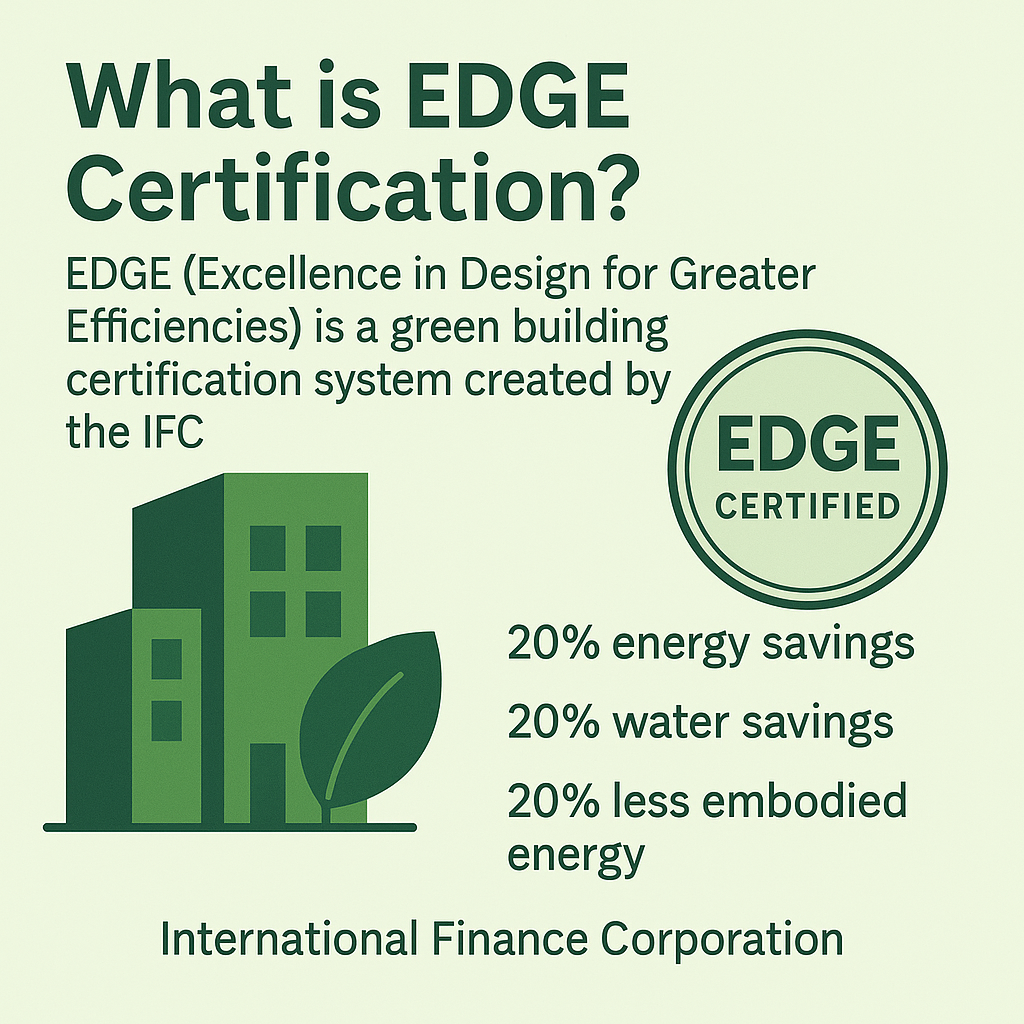
EDGE is an internationally recognised green building certification system developed by the International Finance Corporation (IFC), a member of the World Bank Group. It requires projects to achieve at least 20% savings in energy, water, and embodied energy in materials compared to conventional buildings — making green performance measurable and comparable across projects.
EDGE is particularly well-suited to the affordable and mid-market residential segment. Its focus on quantified resource savings, cost-efficient green measures, and global recognition makes it the preferred certification for residential developers who want credible, data-backed sustainability credentials without over-engineering.
IGBC — Indian Green Building Council
IGBC is part of the Confederation of Indian Industry (CII). It runs the most widely adopted green building certification programme in India, with a residential-specific system called IGBC Green Homes. As of 2026, India has over 10 billion sq ft of registered green building footprint under IGBC — the second largest in the world.
GRIHA — Green Rating for Integrated Habitat Assessment
GRIHA was developed by TERI and is the national rating system officially adopted by the Government of India. It is more commonly used for large residential projects, government housing, and institutional buildings.
Which Certification Is Right for You?
EDGE is ideal for residential developers and homebuyers seeking a globally recognised certification with a clear focus on measurable resource savings — energy, water, and materials — backed by IFC’s international credibility. It is increasingly the preferred choice for affordable housing developers who want to demonstrate tangible sustainability performance in a verifiable, cost-efficient way.
IGBC is the most widely adopted system for individual homebuilders and residential projects across India. The IGBC NEST programme, designed specifically for homes under 150 sq m, starts at under ₹6,000 all-in — making it the most accessible entry point for first-time homebuilders.
GRIHA is preferred for government-backed, institutional, and large-scale sustainable developments.
All three systems are credible. The right choice depends on your project size, developer profile, and whether global recognition matters for your end-use case.
State-Level Green Building Incentives That Actually Exist
This is where most homebuyers leave money on the table. Several Indian states have notified specific incentives for green-certified buildings. According to the IGBC Government Incentives page:
Punjab: Additional 5%, 7.5%, or 10% FAR free of charge, with 100% exemption of building scrutiny fee for Silver, Gold, and Platinum rated projects respectively.
Haryana: Additional 5%, 7.5%, or 10% FAR free of charge for Silver, Gold, and Platinum rated projects.
Central Government: Fast-track environmental clearance for green building projects pre-certified by IGBC.
Tamil Nadu: 25% subsidy on environmental protection infrastructure for certified projects (applicable to industrial projects).
These incentives vary by state and project type. Check the current IGBC incentives list and your state’s building authority rules before construction begins — the financial upside can be significant.
500 Green Homes and Counting — HomeFirst’s Sustainability Leadership in Action
Some milestones are just numbers. This one means something more.
On World Environment Day 2026, HomeFirst Finance crossed a milestone very few Housing Finance Companies in India can claim — 500 certified green homes guided, financed, and delivered to real families across the country. Not 500 green loan applications. Not 500 green brochures distributed. Five hundred actual homes, built with verified green features, certified by authorised green rating bodies, and lived in by real customers saving money every single month.
A Mission That Started With a Simple Question
The question HomeFirst asked itself was this: affordable housing and green housing — why are they treated as two separate worlds? The families HomeFirst serves are building their first home, often in Tier 2 or Tier 3 cities, often on a careful budget. They are exactly the people who benefit most from lower electricity bills, lower water costs, and a healthier living environment. So why should green homes be only for the premium segment?
The answer was that they should not be. And HomeFirst decided to do something about it.
The result was a structured green home programme built around five practical, affordable green features: non-red bricks, tap aerators and low-flow showerheads, 5-star rated fans, 1.5-foot window sunshades, and a double coat of white roof paint. Features that together reduce electricity consumption, cut water usage, lower indoor temperatures, and reduce the carbon footprint of construction.
How the Certification Actually Works
When a customer takes a green home loan with HomeFirst, their loan executive guides them on exactly which features to include — based on home size, location, and construction plan. Once construction is complete, the home undergoes independent verification and certification through authorised green rating bodies.
And once that certification comes through, HomeFirst deposits the green cashback — the full 2.4% subsidy amount — directly into the customer’s bank account. As actual money. Not a rate reduction on paper.
Real HomeFirst customers have shared what this journey looked like for them:
Five hundred homes completed. Many more to go.
What About PMAY 2.0 and Green Homes? This Is Where It Gets Really Interesting
Most homebuyers treat PMAY and green home loans as two completely separate things. Most lenders do too. But if you are eligible for both, you do not have to choose between them.
PMAY-U 2.0: What the Government Already Gives You
Under PMAY-U 2.0 (launched September 2024), if you fall in the EWS, LIG, or MIG income category and are buying or building your first home, the government offers a 4% interest subsidy on the first ₹8 lakhs of your home loan — worth up to ₹1.8 lakhs over 12 years, credited directly to your loan account. Your EMI reduces. Your tenure shortens. The government pays part of your interest.
HomeFirst’s Green Home Subsidy: What We Add on Top
Separately, HomeFirst offers a 2.4% subsidy on green home loans up to ₹25 lakhs. This is HomeFirst’s own benefit — nothing to do with income bracket. It is about how you are building your home: with green features, sustainable materials, and energy-efficient design.
When Both Apply to the Same Customer
Imagine you are a first-time homebuyer eligible for PMAY-U 2.0. And You are also building your home with green features — a cool roof, aerators, BLDC fans, or rainwater harvesting. You take your loan through HomeFirst.
You get the PMAY-U 2.0 interest benefit from the government and HomeFirst’s 2.4% green home loan subsidy on the same loan. Two separate benefits. One home. One lender who can help you access both.
Over a 15–20 year loan tenure, the combined impact of both subsidies on your total interest outgo is significant — especially in the ₹15–25 lakh loan range where most HomeFirst customers operate.
Two subsidies. One home. One smart decision.
Step-by-Step: How to Get a Green Home Loan with HomeFirst
- Plan your green features during design. Think rainwater harvesting, energy-efficient fixtures, aerators, BLDC fans, and cool roof paint. These do not need to be expensive.
- Get certified through an authorised green rating body. Depending on your project, your HomeFirst loan executive will guide you on which certification path fits — including internationally recognised systems that verify measurable savings in energy, water, and materials.
- Apply for a home loan with HomeFirst. Inform them about your green home plan at the time of application.
- Avail the 2.4% green home loan subsidy on your loan up to ₹25 lakhs — one of the best green home financial benefits available in India today.
- Complete construction and get your final certificate. You now have a certified green home and a more affordable loan.
HomeFirst’s team has already helped over 500 homebuyers through this journey. The process is practical and the support is real. Start at HomeFirst’s home loan page.
FAQs
Q: What is a green home and why does it matter for Indian homebuyers?
A green home is built to measurably reduce electricity, water, and construction material use — verified by an independent rating body. For Indian homebuyers, especially first-timers in Tier 2 and Tier 3 cities, this means lower monthly bills, a healthier living environment, and access to financial subsidies not available on regular home loans.
Q: Is green home certification mandatory in India?
No, it is currently voluntary for individual homeowners. However, several states now require specific features — like rainwater harvesting and solar water heaters — for new construction above a certain size. Certification itself remains optional but comes with real financial and practical benefits worth considering from the start.
Q: Can I get both PMAY subsidy and a green home loan benefit together? Y
es. PMAY-U 2.0 is a government interest subsidy based on your income eligibility, while HomeFirst’s 2.4% green home subsidy is based on how your home is built. If you qualify for both and take your loan through HomeFirst, both benefits apply to the same loan — independently of each other.
Q: How much does green home certification cost in India?
For individual homes under 150 sq m, the IGBC NEST programme starts at ₹5,900 all-in for provisional and final certification combined. Other systems may vary based on project size and scope. In most cases, the financial benefits — subsidies, lower bills, FAR incentives — far outweigh the certification cost.
More FAQs
Q: When does HomeFirst’s green cashback actually reach my account?
The 2.4% cashback is deposited directly into your bank account after your home receives its green certificate from an authorised rating body. There is no hidden condition — you build with agreed green features, certification happens independently, and the money transfers to you. Over 500 HomeFirst customers have already received it.
Q: What green features should I include when building my home?
Start with the basics: non-red bricks, tap aerators, low-flow showerheads, 5-star rated fans, 1.5-foot window sunshades, and a double coat of white roof paint. These are affordable, easy to implement, and together meet the measurable resource-saving thresholds required by most green rating systems in India.
Q: Is it possible to get green certification for a home that is already built?
Yes. Most rating systems have an existing buildings category for this. However, retrofitting is almost always more expensive than building green from scratch — because you are undoing decisions already made in construction. If you are still in the planning or early construction stage, start green. It costs far less.
Conclusion
Homebuyers across India can obtain green home certification without facing a complicated process, high costs, or premium-segment restrictions. With accessible certification starting under ₹6,000 for individual homes, state-level FAR incentives, and lenders like HomeFirst offering a 2.4% loan subsidy on green home loans up to ₹25 lakhs — on top of PMAY-U 2.0 — the financial case for going green has never been more practical.
Plan your home thoughtfully. Build with green features from day one. And partner with a lender who actually supports your green home journey — not just in brochures, but in the bank account.
Happy World Environment Day 🌿 — from the HomeFirst family, proud to have guided 500 green homebuyers and counting.