Encumbrance Certificate: Why it is Important for Home Loan?
Anurag Sodani • June 10, 2026
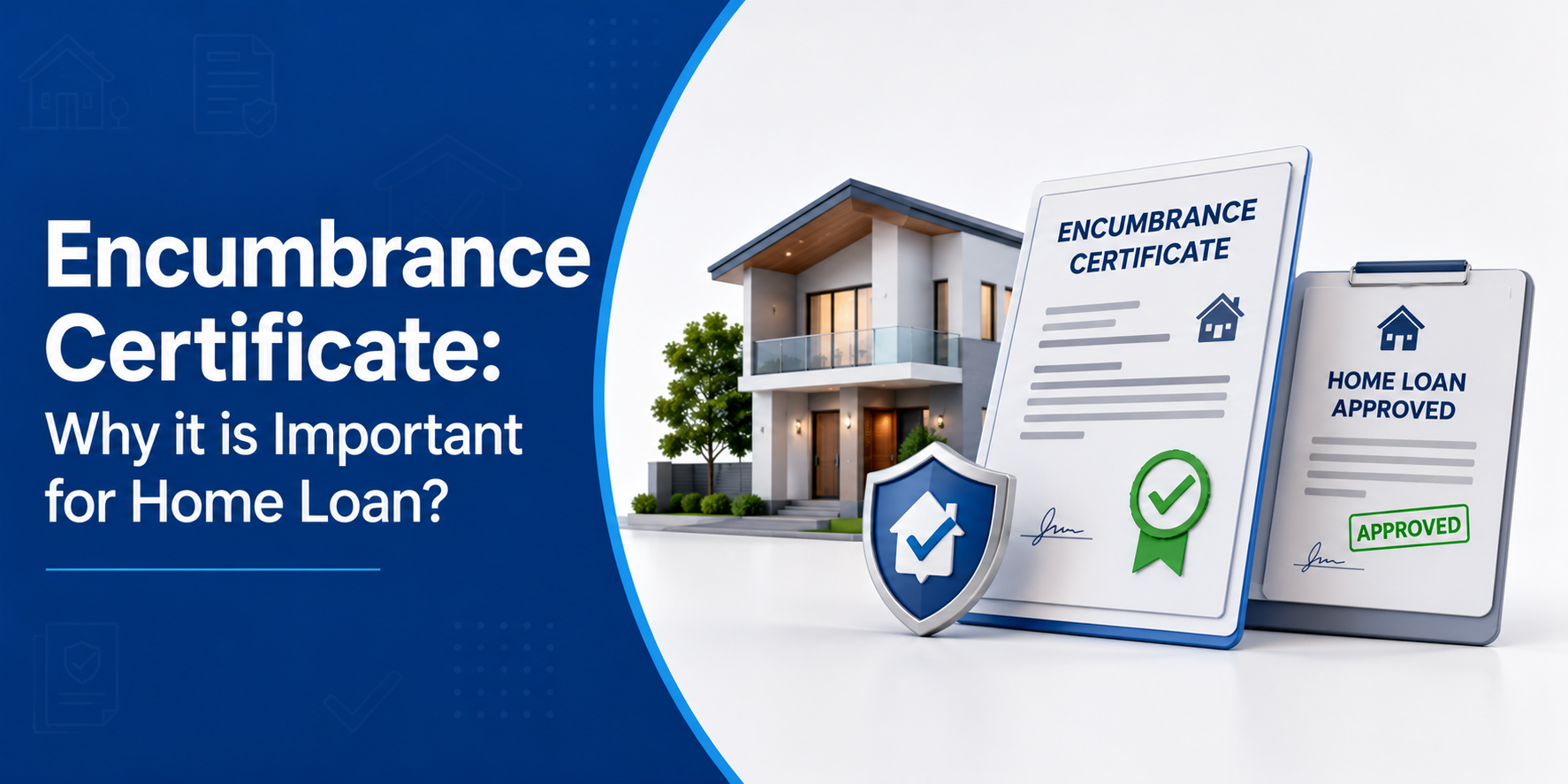
Buying a home is one of the most important financial decisions you will ever make. Before you sign any documents or hand over any money, you need to know exactly what you are getting into. That is where an encumbrance certificate comes in.
Think of it as a property’s financial health report. It tells you whether the property you are about to buy has any outstanding loans, mortgages, or legal claims attached to it. If the property has hidden liabilities, you could end up paying for someone else’s debt. No one wants that surprise after moving in.
When you apply for a home loan, lenders like Home First Finance will always ask for this document as part of the property verification process. Understanding why they ask for it — and how to get one — can save you time, money, and a lot of stress.
TL;DR — Quick Summary An encumbrance certificate (EC) is an official document that shows all registered transactions on a property for a specific period. It confirms whether a property is free from mortgages, loans, or legal disputes. Lenders require the EC before approving a home loan to verify that the property is legally clear. You can apply for an EC offline at your Sub-Registrar’s Office or online via state portals. A Nil EC means no financial or legal liabilities were registered on the property during the searched period. Always check the EC for at least the last 15 to 30 years before purchasing any property.
What Is an Encumbrance Certificate (EC)?
An encumbrance certificate is an official document issued by the Sub-Registrar of Assurances (or the equivalent authority in your state). It lists all registered transactions related to a specific property over a chosen period of time.
The word “encumbrance” means a charge, claim, or liability on a property. So an EC essentially shows whether any such charge exists — in other words, whether the property is legally free and clear.
You can apply for an EC for any period you want — typically 13 years, but lenders often ask for up to 30 years for home loans. This helps trace the full ownership and financial history of the property.
What Does an Encumbrance Certificate Include?
A standard encumbrance certificate typically contains the following information:
- Full details of the property — survey number, plot number, area, and location
- Names of all past and present owners
- All registered sale deeds and transfer documents
- Any mortgage or loan registered against the property
- Gift deeds, partition deeds, or release deeds (if applicable)
- Court attachments or revenue recovery notices (if registered)
- The time period for which the certificate has been issued
One thing to note: an EC only covers registered transactions. If any transaction was done informally — without proper registration — it will not show up in the certificate. This is why an EC alone is not the only document you should check.
Why Is the Encumbrance Certificate (EC) Important?
The EC plays a critical role at multiple stages of a property transaction. Here is why it matters:
1. Property Ownership Verification
The EC creates a clear chain of ownership. It shows who owned the property in the past, when it changed hands, and who the current legal owner is. Without this, you cannot be certain that the seller actually has the legal right to sell.
2. Home Loan Processing
When you apply for a home loan, the lender uses the EC to verify that the property can be mortgaged. A property with an existing home loan that has not been cleared cannot be used as fresh collateral. Lenders like Home First Finance require the EC as a standard part of the legal due diligence process.
3. Legal Due Diligence
Before finalising a property deal, a lawyer or lender reviews the EC to ensure there are no unresolved disputes, attachments, or claims. This step protects the buyer from inheriting someone else’s legal problems.
4. Fraud Prevention
Property fraud is not uncommon in India. Sellers sometimes try to sell a property that is already mortgaged or stuck in a legal dispute. The EC is one of the most reliable ways to catch such fraud before it causes financial damage.
5. Property Resale
When you decide to sell a property in the future, the buyer or their lender will ask for an EC. If you have maintained clean records and cleared all dues, this process becomes straightforward. A property with a clean EC is easier to sell.
Why Do Lenders Ask for an Encumbrance Certificate Before Approving a Home Loan?
From a lender’s perspective, the property you purchase acts as collateral for the loan. If the property already has an existing mortgage or unpaid loan registered against it, the lender cannot take a fresh first charge. That puts the bank or housing finance company at serious risk.
Before checking your home loan eligibility or approving a loan, the lender’s legal team will review the EC for at least 13 years — and often 30 years for properties in newer developments. They check for:
- Any existing mortgage or hypothecation on the property
- Pending legal cases or court attachments
- Unclear or disputed ownership
- Any revenue recovery dues registered against the property
If the EC shows any unresolved encumbrances, the loan approval may be put on hold until the applicant provides proof that the liability has been cleared. In some cases, the loan may be rejected altogether.
Encumbrance Certificate Documents Required
The documents required to apply for an encumbrance certificate are broadly similar across states, though small variations may exist. Here is a standard list:
| Document | Purpose | Notes |
| Application Form (Form 22) | Official request for EC | Available at Sub-Registrar’s Office or online portals |
| Property Address / Survey Number | Identify the property | As per sale deed or tax records |
| Copy of Sale Deed / Title Document | Confirm property ownership | Attested copy preferred |
| Applicant’s Identity Proof | Verify identity of applicant | Aadhaar card, PAN card, or Voter ID |
| Period of EC Required | Define the search duration | State minimum period: 13 years; lenders may ask for 30 years |
| Proof of Property Tax Payment | Confirm property records match | Receipt of latest payment |
| Court Fee Stamp / DD (for fees) | Pay applicable charges | Varies by state and duration |
How to Obtain an Encumbrance Certificate?
You can apply for an EC either offline through your local Sub-Registrar’s Office or online through your state’s official registration portal.
Offline Application Process
The offline process is straightforward and accepted in all states:
- Visit your local Sub-Registrar’s Office (also called the Office of Inspector General of Registration in some states).
- Collect Form 22 (Application for Encumbrance Certificate) from the office or download it from the official portal.
- Fill in the property details, including survey number, door number, extent of property, and the period for which you need the EC.
- Attach the required documents (listed above).
- Submit the form and documents along with the applicable court fee or demand draft.
- Collect the acknowledgement slip with your application number.
- Return after the stipulated processing time to collect the EC — usually 3 to 15 working days, depending on the state.
Encumbrance Certificate Online Application Process
Several states now allow you to apply for an encumbrance certificate online through their official portals. Here are the key ones:
- Karnataka: landrecords.karnataka.gov.in
- Tamil Nadu: tnreginet.gov.in
- Andhra Pradesh: registration.ap.gov.in
- Kerala: keralaregistration.gov.in
- Maharashtra: igrmaharashtra.gov.in
The general online steps are as follows:
- Visit the official state registration portal for your state (links above).
- Register yourself as a new user or log in with your existing credentials.
- Navigate to the ‘Encumbrance Certificate’ or ‘EC Application’ section.
- Enter the property details — survey number, village/town, taluk, district, and the required period.
- Upload the required documents as per the portal’s instructions.
- Pay the applicable fees online using net banking, UPI, or debit card.
- Submit the application and note your application reference number.
- Download the EC once it is processed. In some states, you can download a digitally signed EC within minutes. In others, you may need to collect a physical copy.
Encumbrance Certificate Fees and Charges
The fees for an encumbrance certificate vary by state and by the period for which you are applying. Here is a general overview:
| State | Approximate Fees | Notes |
| Tamil Nadu | Rs. 15 (for first year) + Rs. 5 per additional year | Via tnreginet.gov.in |
| Karnataka | Rs. 25 to Rs. 100 (varies by period) | Via Kaveri Online portal |
| Andhra Pradesh | Rs. 200 to Rs. 500 (varies by period) | Via Meeseva or SRO |
| Kerala | Rs. 20 to Rs. 100 (varies by period) | Via Kerala Registration portal |
| Maharashtra | Rs. 100 to Rs. 300 (varies by period) | Via IGR Maharashtra portal |
| Telangana | Rs. 200 to Rs. 500 (varies by period) | Via TGREC portal |
| Other States | Rs. 25 to Rs. 500 (approx.) | Check respective state SRO |
Note: Fees are subject to revision by the respective state governments. Always confirm the current charges on the official state portal before applying.
How to Check Encumbrance Certificate Status?
After submitting your EC application, you can track the status online in most states:
- Visit the official state registration portal.
- Go to the ‘EC Application Status’ or ‘Track Application’ section.
- Enter your application reference number and date of submission.
- The portal will display the current status — pending, under review, or ready for download.
In Tamil Nadu, for example, you can check your encumbrance certificate status directly on tnreginet.gov.in using your transaction number. Karnataka offers similar tracking via the Kaveri Online Services portal.
If you applied offline, you can call or visit the Sub-Registrar’s Office and quote your application number to get a status update.
How to Download an Encumbrance Certificate Online?
In states that have fully digitised the process, downloading the EC online is simple:
- Log in to the official state registration portal with your credentials.
- Go to the ‘Download EC’ or ‘View Application’ section.
- Enter your application number or registered mobile number.
- The system will display your EC with a unique verification number.
- Click ‘Download’ to save the digitally signed PDF to your device.
In Tamil Nadu, Karnataka, and Andhra Pradesh, digitally signed ECs are now legally valid for home loan processing. Always check with your lender whether they accept a digital EC or need a physical stamped copy.
What Is a Nil Encumbrance Certificate?
A Nil Encumbrance Certificate — sometimes called a non-encumbrance certificate — is issued when the Sub-Registrar finds no registered transactions on the property during the period you specified in your application.
In plain terms: it means no mortgage, no loan, no legal dispute, and no financial claim has been formally registered against the property during that time.
A Nil EC is generally considered a positive sign for home buyers. It suggests the property is legally clean. However, remember that a Nil EC only covers registered transactions. Unregistered agreements or informal arrangements will not appear here.
Before you interpret a Nil EC as a complete green light, it is advisable to also check the property tax records, patta/chitta documents, and consult a property lawyer. Once you are confident about the property’s legal status, you can proceed to calculate your home loan EMI and plan your finances.
Common Reasons for EC Rejection or Delays
Sometimes, EC applications face delays or outright rejections. Here are the common causes:
- Incorrect survey number or plot number mentioned in the application
- Mismatch between the address in the application and the official property records
- Documents submitted are unclear, incomplete, or not properly attested
- The property falls under multiple sub-registration jurisdictions, causing confusion
- Pending dues or disputes at the Sub-Registrar’s Office
- High volume of applications causing processing backlogs
If your EC is delayed, follow up directly with the Sub-Registrar’s Office with your acknowledgement number. Most delays are resolved once the discrepancy is clarified.
Important Things to Check Before Using an EC for a Home Loan
Getting the EC is just the beginning. Here is what to verify before submitting it to your lender:
- Ensure the EC covers at least 15 to 30 years — lenders typically require this.
- Verify that all previous home loans mentioned in the EC have been officially closed with a registered release deed.
- Cross-check the owner names in the EC with the current sale deed to confirm the chain of ownership.
- If the EC mentions any court attachment or revenue recovery notice, get it officially resolved before applying for the loan.
- Confirm that the property details — area, location, survey number — match across all documents.
If you are unsure about what your EC reveals, consult a property lawyer before proceeding. You can also explore more resources on the Home First Finance blog for guidance on property documents and home loans.
Conclusion
An encumbrance certificate is not just a formality. It is a critical document that protects you from inheriting legal or financial problems tied to a property. For lenders, it is a non-negotiable part of the home loan approval process.
Whether you are a first-time home buyer or an experienced investor, always verify the EC before finalising any property deal. Apply for it early, check it carefully, and keep a copy for your records.
Ready to take the next step? Explore your home loan options with Home First Finance and use our home loan eligibility calculator to know how much you can borrow.
Frequently Asked Questions (FAQs)
Q: What does a nil encumbrance certificate (EC) mean?
A: A Nil Encumbrance Certificate means that no registered financial transactions, mortgages, loans, or legal charges were found against the property during the period specified in the application. It indicates the property is free from registered liabilities, though unregistered agreements are not covered.
Q: What is an encumbrance certificate?
A: An encumbrance certificate is an official document issued by the Sub-Registrar of Assurances (or equivalent authority) that lists all registered transactions — sales, mortgages, gifts, and legal charges — on a property for a specified period. It helps verify whether a property is free from financial and legal liabilities.
Q: How to get an encumbrance certificate for a property?
A: You can get an EC by submitting Form 22 at the Sub-Registrar’s Office with the required property details and documents. Several states also offer online EC applications through official portals such as tnreginet.gov.in (Tamil Nadu), landrecords.karnataka.gov.in (Karnataka), and registration.ap.gov.in (Andhra Pradesh).
Q: What are CN and SAN in an encumbrance certificate?
A: CN stands for Certificate Number — the unique identifier of the encumbrance certificate issued by the Sub-Registrar’s Office. SAN stands for Sub-Registrar Application Number, which is the tracking number given at the time of application. Both are used to verify and download the certificate online.
Q: भार प्रमाणपत्र क्या होता है? (What is an encumbrance certificate in Hindi?)
A: भार प्रमाणपत्र (Encumbrance Certificate) एक आधिकारिक दस्तावेज़ है जो किसी संपत्ति पर पंजीकृत सभी वित्तीय लेनदेन — जैसे बिक्री, बंधक, या कानूनी दावे — की जानकारी देता है। यह दस्तावेज़ गृह ऋण (Home Loan) प्राप्त करने और संपत्ति की कानूनी स्थिति जाँचने के लिए आवश्यक है।