Credit Score Explained: Meaning, Range & Importance in India (2026 Guide)
Anurag Sodani • July 9, 2026
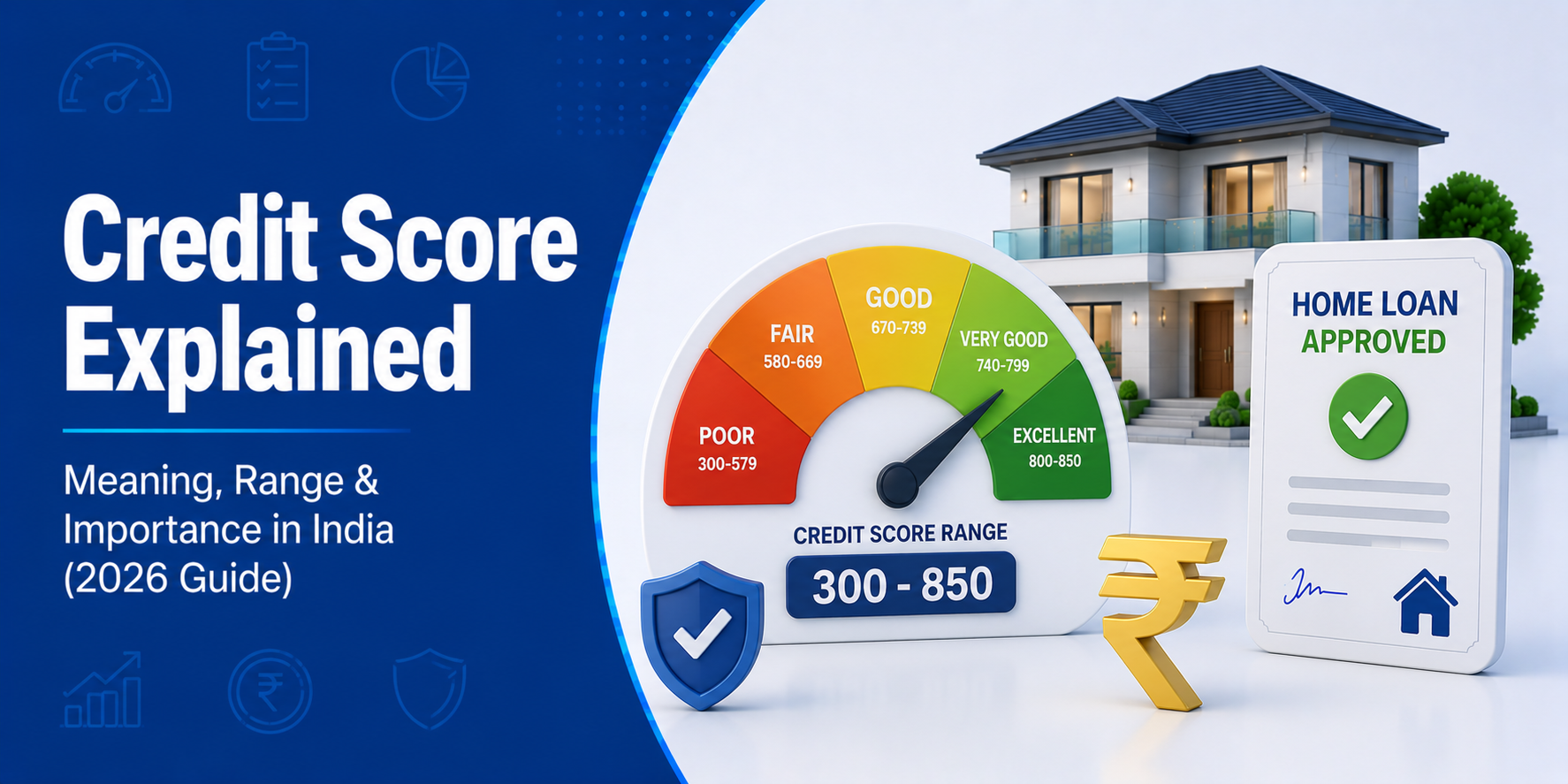

Summary: A credit score is a three-digit number, usually ranging from 300 to 900, that reflects how reliably you repay borrowed money. Bureaus like CIBIL, CRIF High Mark, Experian, and Equifax calculate this number using your credit report, which tracks loans, credit cards, and payment history. A good credit score improves approval chances for credit card applications and loan applications, and it often results in better interest rates. This guide explains what a credit score is, how it differs from a CIBIL score, what counts as a good credit score, and the factors that shape it. Whether you’re planning a large purchase or your first home loan, understanding your credit score helps you make smarter financial decisions in 2026.
What Is a Credit Score?
A credit score is a numerical summary of your credit behaviour. It tells lenders, in seconds, how likely you are to repay a loan or credit card bill on time. Every time you take a loan, use a credit card, or miss a payment, that activity gets reported to credit bureaus in India, which then update your credit report.
Banks and NBFCs use this score before approving loan applications or credit card applications. A higher credit score signals lower risk, which often means faster approvals and better interest rates.
Your credit score isn’t static. It moves up or down based on your recent financial behaviour, including how well you manage credit card accounts and repay EMIs.
Credit Score vs CIBIL Score
People often use “credit score” and “CIBIL score” interchangeably, but they aren’t identical.
- Credit score is the umbrella term for the score generated by any bureau.
- CIBIL score is specifically the score issued by TransUnion CIBIL, one of four credit bureaus operating in India.
The other three are:
- CRIF High Mark – widely used by housing finance companies
- Experian – used by several NBFCs and fintech lenders
- Equifax – used across banking and retail lending
Each bureau may generate a slightly different score for you because they don’t all receive identical data at the same time from every lender. That’s why your CIBIL score and your CRIF High Mark score might differ by a few points.
Credit Score Range in India Explained
In India, credit score ranges from 300 to 900. Here’s a simple breakdown:
| Score Range | Category | What It Means |
|---|---|---|
| 300–549 | Poor | High risk; loan applications likely rejected |
| 550–649 | Fair | Some approvals possible, often at higher interest rates |
| 650–749 | Good | Reasonable approval odds and moderate rates |
| 750–900 | Excellent | Best approval odds and lowest interest rates |
A score of 0 or -1 usually means you have no credit history yet, often because you’ve never used a loan or credit card.
What Is Considered a Good Credit Score?
A good credit score in India generally starts at 700, though most lenders prefer applicants above 750 for the best terms. If you’re checking your credit score before a big loan application, aim for this benchmark.
A good credit score typically reflects:
- Consistent on-time payment history
- Low credit utilization ratio
- A healthy mix of secured and unsecured credit
- No recent loan defaults or settlements
Why Credit Scores Matter for Financial Health
Your credit score influences far more than loan approvals. It affects:
- Interest rates you’re offered on home loans, personal loans, and credit cards
- Credit limits on new credit card accounts
- Negotiating power with lenders
- Speed of approval for urgent credit needs
If you’re planning to buy a home, your credit score plays a direct role in your home loan eligibility. Lenders review it closely before approving a home loan, since it indicates how reliably you’ve handled past credit.
How Banks & NBFCs Evaluate Creditworthiness
Lenders don’t look at your credit score in isolation. They evaluate:
- Repayment history across all credit accounts
- Total outstanding debt versus income
- Number of recent credit applications
- Length of credit history
- Type of credit used (secured vs unsecured)
This combined view helps them decide not just whether to approve your loan or credit card application, but also the interest rate and loan amount they’re comfortable offering.
Factors That Affect Your Credit Score
Several elements shape your score over time:
- Payment history – timely payment of credit card bills and EMIs matters most
- Credit utilization ratio – using less than 30% of your credit limit is ideal
- Credit mix – a blend of credit cards and loans can help
- Length of credit history – older, well-managed accounts help your score
- New credit inquiries – too many loan or credit card applications in a short span can hurt your credit score
How Often Your Score Gets Updated
Credit bureaus typically update your credit report and score once a month, based on data submitted by lenders. However, some lenders report more frequently, so your score may reflect very recent changes within a few weeks.
If you’ve just paid off a large credit card balance or closed a loan, it can take 30–45 days to see the improvement reflected in your credit score.
Common Credit Score Myths
- “Checking your own credit score hurts it.” False. A self-check is a soft inquiry and doesn’t affect your score.
- “Closing an old credit card boosts your score.” Often the opposite happens, since it shortens your credit history and reduces available credit.
- “You need a loan to have a credit score.” Even credit card usage builds a credit score.
- “A good credit score guarantees loan approval.” It improves odds significantly, but lenders also assess income and existing obligations.
FAQs Related to Credit Score
What is a credit score?
It’s a three-digit number, typically between 300 and 900, indicating your creditworthiness based on your credit report and repayment history.
Check free credit score online with CRIF
You can check your credit score for free through CRIF High Mark’s official portal, which allows one free report per year.
How is your credit score calculated?
It’s calculated using payment history, credit utilization ratio, credit mix, length of credit history, and recent credit inquiries.
Role and importance of credit score
It determines your eligibility for loans and credit cards, and directly influences the interest rates lenders offer you.
CIBIL score vs credit score – what is the difference?
CIBIL score is one specific type of credit score, issued by TransUnion CIBIL. Other bureaus like CRIF, Experian, and Equifax also issue their own credit scores.
Tips to maintain a good credit score?
Pay bills on time, keep utilization low, avoid frequent loan applications, and maintain a healthy credit mix.
What is the difference between credit score and credit rating?
A credit score applies to individuals, while a credit rating typically applies to companies or financial instruments, assessed by agencies like CRISIL or ICRA.
Conclusion
Your credit score is more than a number; it’s a reflection of your financial discipline and a gateway to better borrowing opportunities. Understanding how it’s calculated, where you stand within the 300–900 range, and how it differs across bureaus like CIBIL, CRIF High Mark, Experian, and Equifax puts you in control of your financial narrative. A good credit score doesn’t happen by accident, it’s built through consistent, timely repayments, sensible credit utilization, and a healthy mix of credit accounts over time. Whether you’re applying for a credit card, a personal loan, or planning a home purchase, your credit score will influence the terms you’re offered, often more than any other single factor.
The good news is that this number is entirely within your influence. By checking your credit report regularly, correcting errors promptly, and maintaining disciplined repayment habits, you can steadily strengthen your score. As you plan bigger financial milestones ahead, especially something as significant as buying a home, knowing your credit score today helps you set realistic expectations and prepare well in advance, rather than being caught off guard when it’s time to apply for financing. Understanding your credit score is the first step toward better financial planning, especially if a home purchase is on your horizon. You can review your current eligibility using a home loan EMI calculator to see how your score and income together shape your borrowing capacity.